Key Takeaways
- Polygon has replaced its original MATIC token with a new asset called POL, as part of the "Polygon 2.0" roadmap.
- POL is designed to secure multiple blockchains within Polygon's expanding network, rather than mainly one chain.
- While tokens on the Polygon network converted automatically, legacy MATIC held on Ethereum may still require a manual swap.
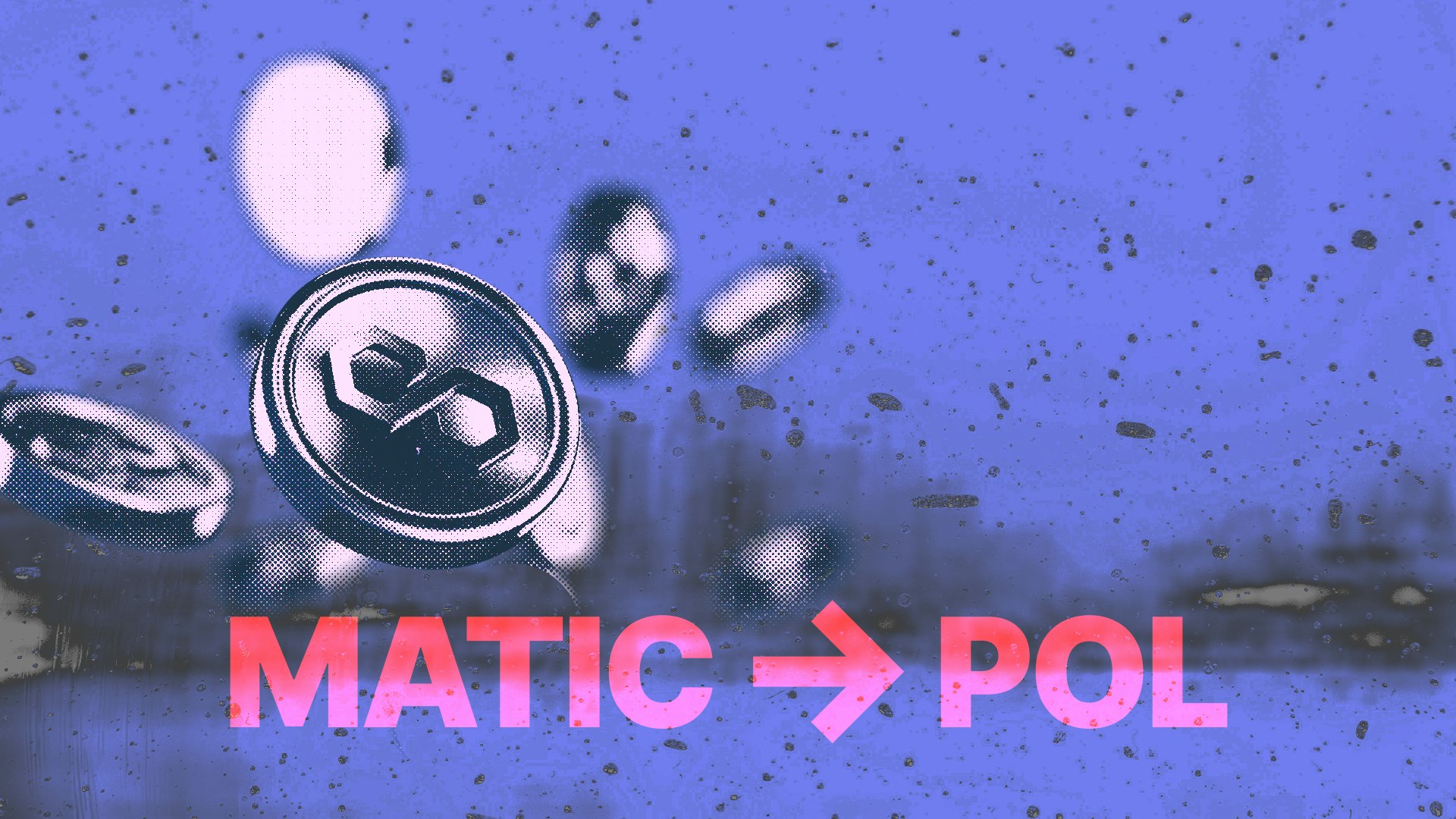
You might have opened your portfolio and noticed something odd. The familiar MATIC ticker is gone, and there is a token called POL instead. If you have been self-custodying your crypto or stepping back from the market for a while, this kind of change can feel alarming.
Your MATIC is not lost, and the value of your holdings will still move up and down with the market. The shift from MATIC to POL is part of a planned technical upgrade to Polygon that aims to turn it from a single scaling chain into a broader network of connected blockchains.
The shift from MATIC to POL
In September 2024, Polygon carried out a token migration that retired MATIC and introduced POL. This was not just a name change. It was a redesign of how the token works inside the network economy, often described as "Polygon 2.0".
MATIC had been in use since 2019, when Polygon was mainly a single "sidechain" helping Ethereum handle more transactions at lower cost. Since then, Polygon has developed additional technologies such as zero-knowledge (ZK) rollups and specific application-focused chains. As the ecosystem became more complex, the original token model was no longer a neat fit.
Why the upgrade was introduced
A key idea behind Polygon 2.0 is the "AggLayer" (Aggregation Layer).
You can think of many current blockchains as separate islands. Moving assets between them is often slow, can be expensive, and usually relies on bridges that introduce extra technical and security risks. Polygon’s plan is to connect many of these "islands" so they feel more like parts of a single network.
POL sits at the centre of this design. While MATIC mainly secured the Polygon Proof-of-Stake (PoS) chain, POL is intended to be a "hyperproductive" token. In practice, this means validators can stake POL to help secure several different Polygon-based blockchains at the same time, and receive rewards from each of them.
That increased earning potential also comes with higher complexity and additional risks. Validators must manage more systems, and the overall design is still evolving, so there is no guarantee that the model will work as intended over the long term.
How POL is used
If you already use the Polygon network, very little may appear to have changed in your everyday activity. The token name has changed, but the basic actions will look similar, even though the underlying system is more involved.
-
Gas fees
Where you previously used MATIC to pay for transaction fees when swapping tokens or buying NFTs on Polygon, you now pay in POL. Costs are still lower compared with Ethereum mainnet, since Polygon is built as a scaling solution. While Ethereum's Dencun upgrade has significantly reduced mainnet fees, Polygon transactions remain cheaper at the time of writing, January 2026, though this may change. -
Staking and rewards
Users who help secure the network by locking up their tokens now stake POL instead of MATIC. Thanks to the "hyperproductive" design, validators may have more possible revenue sources, because they can secure multiple chains across the AggLayer.
Higher potential rewards always come with higher or more complex risks. Staking involves smart contracts, validator performance, slashing rules and market risk. You can lose some or all of your staked tokens, and rewards are not guaranteed. -
Governance
POL holders can take part in governance, for example voting on protocol changes or treasury decisions. This gives token holders influence over Polygon’s direction, but it also means future rules and economics can change based on governance outcomes, which may not always favour every holder.
What happened to your MATIC?
What you need to do, if anything, depends on where you held your MATIC at the time of the migration.
Tokens held on the Polygon network
If you held MATIC directly on the Polygon PoS network, the upgrade was handled at protocol level. On 4 September 2024, the smart contracts were updated and your balance should now show as POL instead of MATIC.
In most cases, no further action is required for these holdings. You should still double check token labels and contract addresses in your wallet before sending or receiving any assets, as mistakes can lead to permanent loss of funds.
Tokens held on centralised exchanges
If your MATIC was in an exchange wallet, it was typically converted to POL at a 1:1 ratio.
If your MATIC is held on CoinJar, you will need to manually convert it to POL using the "Convert" function in the CoinJar app. Converting MATIC to POL is free on CoinJar and will swap at a 1:1 ratio, but may have capital gains tax implications.
Converting one cryptocurrency to another may be considered a taxable event. If you are uncertain about the tax implications, please seek advice from a licensed tax advisor.
Each exchange sets its own timetable and rules. If you are unsure how your account was affected, check the official announcements or support pages of your chosen platform, not links from social media or unofficial forums.
Tokens held on Ethereum (ERC‑20)
This is where you are most likely to need to act.
If you hold "legacy" ERC‑20 MATIC on the Ethereum mainnet, for example in a Ledger or MetaMask wallet pointed at Ethereum rather than Polygon, those tokens did not convert by themselves.
To upgrade these tokens, you generally need to visit the official Polygon Portal and swap ERC‑20 MATIC for ERC‑20 POL. This uses a normal Ethereum transaction, so you will need some ETH in your wallet to pay the gas fee.
Transaction fees on Ethereum can be high and unpredictable. It is worth checking the cost in GBP terms before you proceed, particularly for smaller balances where the gas fee might be a large share of your total holding. Make sure you are using the correct contract addresses and links from official Polygon channels, because sending tokens to the wrong address or a fake contract is usually irreversible.
Security and risks
Major token migrations tend to attract scammers. Confusion creates opportunities for fraud, and this can carry on for years after the initial upgrade.
Red flags to watch for
-
Fake migration sites
Scammers often buy adverts on search engines for phrases like "Swap MATIC to POL" or "Polygon token upgrade". Their sites may copy the look of the real portal, but when you connect your wallet they attempt to drain your assets. -
Unsolicited "support" messages
No legitimate member of the Polygon team, CoinJar, or other reputable exchanges will contact you first in private messages to ask for your seed phrase, your private keys, or to "verify" your wallet. Anyone who does this is almost certainly trying to steal your funds. -
Extreme urgency and threats
Fraudsters often claim your tokens will be "burnt", "frozen", or "lost forever" unless you swap immediately using their link. While genuine migrations can have deadlines, official information will be published on Polygon’s verified channels, not through random DMs or comments.
To reduce your risk, always type the official URL yourself into your browser, or use bookmarks that you have previously checked. Avoid clicking migration links in ads, emails, or social media posts, even if they look genuine.
The future of Polygon
With POL, Polygon is attempting to support a future where many different blockchains can communicate with each other more smoothly. The project is aiming to be more than a cheaper way to use Ethereum, and instead to act as a shared "value layer" for a large number of applications.
By using a single token for security and coordination across many chains, POL is designed to reduce fragmentation of liquidity and security. If the design works as planned, users might eventually interact with apps that feel fast and connected, without needing to think about which specific Polygon chain they are using in the background.
There is no guarantee that this vision will succeed. Polygon faces significant technical, competitive, and regulatory risks, and the value of POL could go down as well as up.
Do not make investment decisions based on future roadmap goals or marketing claims. Cryptoassets are high risk and you could lose all your money.

CoinJar
CoinJar is one of the longest-running cryptocurrency exchanges in the world. Since 2013, we’ve helped hundreds of thousands of people worldwide to buy, sell and spend billions of dollars in Bitcoin, Ethereum and dozens of other cryptocurrencies.
Read full bio